

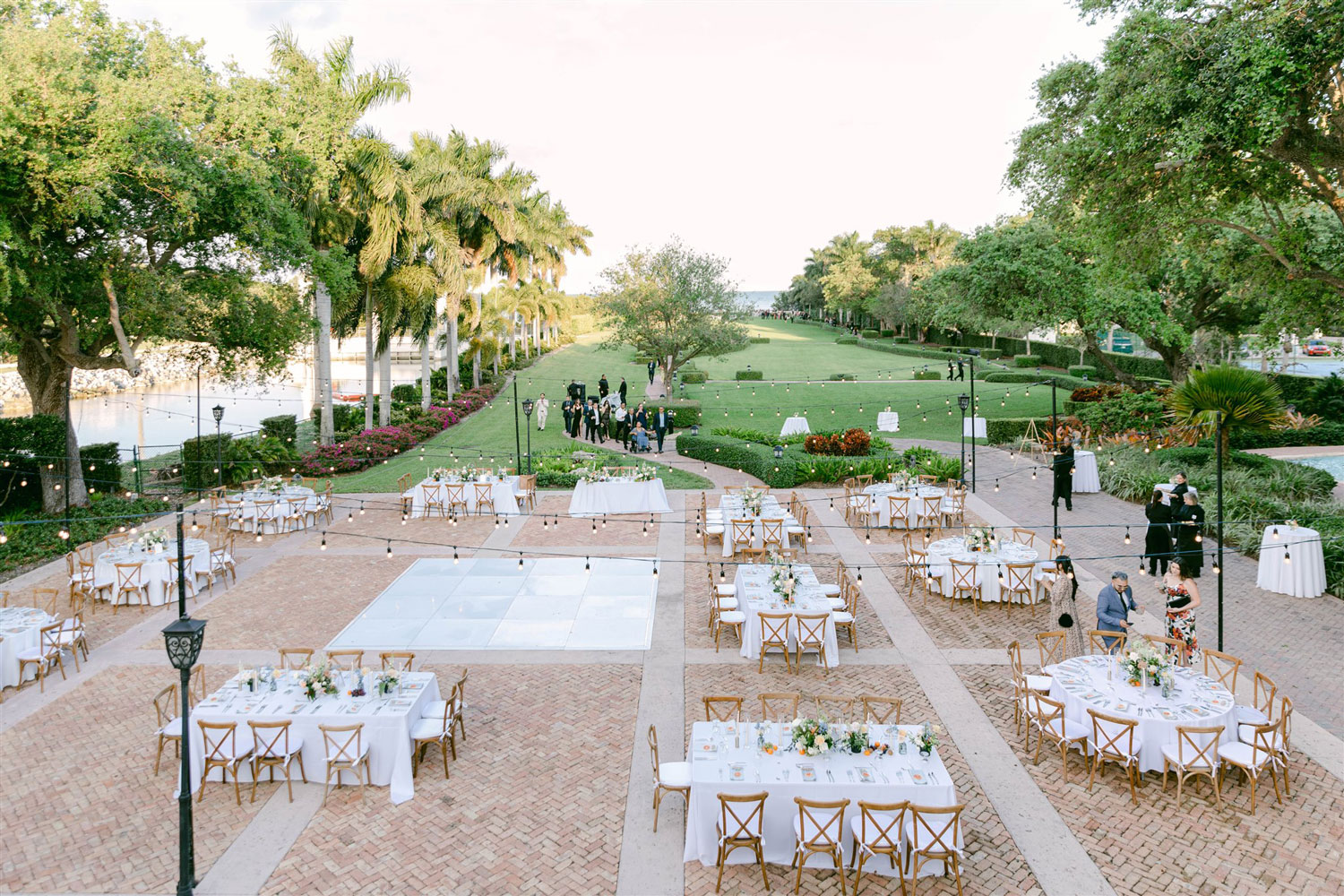

One of the most significant decisions in wedding reception planning is choosing between a cocktail-style reception and a traditional seated dinner—a choice that affects everything from venue requirements and budget allocation to guest experience and celebration energy. In Miami, where both formats thrive and venue diversity supports either approach beautifully, couples have genuine freedom to choose the style that best reflects their personality, guest list dynamics, and vision for their celebration. A Joy Catering produces both formats at the highest level, and our experience with thousands of Miami weddings gives us clear-eyed perspective on the advantages, challenges, and creative possibilities each format offers.
Understanding the Cocktail Reception Format
A cocktail reception replaces the traditional seated dinner with an extended period of circulating, stationed, and interactive food service—guests move freely through the space, eat from various food stations and passed trays, and socialize without the structure of assigned tables and courses. This format creates high energy, maximum social interaction, and a party atmosphere that appeals to couples who envision their reception as a celebration rather than a formal meal.
The food program for a cocktail reception must be more substantial than a typical cocktail hour because it serves as the entire meal rather than a prelude to dinner. A Joy Catering designs cocktail reception menus with twelve to eighteen pieces per person across the evening—combining lighter bites early with increasingly substantial items as the event progresses. By the midpoint of a three-hour cocktail reception, guests should be receiving hearty items like slider stations, carving displays, pasta preparations, and other meal-replacement foods that prevent hunger from diminishing celebration enjoyment.
Planning an event?
Let our team create a custom menu and experience for your celebration. Free consultation, no obligation.
Get a Free Quote →Station variety is crucial for cocktail receptions—guests eating from the same options for three hours experience diminishing excitement. We design progressive station concepts where different options open at different times throughout the evening, creating waves of discovery that maintain interest. A raw bar and light passed items welcome guests initially. Forty-five minutes in, a live cooking station opens. Another thirty minutes, a carving station debuts. Late in the evening, comfort food stations emerge for dancing guests. This staggered approach creates a sense of journey and surprise throughout the reception.
The cocktail format excels at certain celebrations: events with large guest lists where seating logistics become prohibitively expensive, celebrations in unique venues where table placement would compromise the space's character, couples who prioritize dancing and socializing over formal dining, and events where guests span multiple social circles who will benefit from free-flowing interaction rather than fixed table assignments.
The Case for Seated Dinner Receptions
Seated dinners provide structure, formality, and the distinctly satisfying experience of a multi-course meal served with professional precision. Guests are seated at assigned tables with curated company, served courses at a controlled pace, and experience the ceremonial progression from lighter beginnings through substantial main courses to sweet conclusions. This format supports toasts, speeches, and formal moments that require a captive, comfortable audience—something the cocktail format makes difficult.
From a culinary perspective, seated dinners allow chefs to execute at their highest level. Plated courses are composed with precision, temperature controlled to the moment of service, and presented with the artistry that composed plates allow. Each dish is designed as a complete composition—protein, vegetable, starch, and sauce arranged with intentionality on the plate. This level of culinary craft simply isn't possible with cocktail-format service, where food must be portable, hand-held, and practical for standing consumption.
Guest comfort strongly favors seated dinners, particularly for celebrations lasting four or more hours. Standing for extended periods fatigues guests—especially older attendees, those in formal footwear, or anyone with mobility considerations. Seated dinners provide comfortable rest periods between dancing, ensure that every guest (regardless of physical ability) participates equally in the dining experience, and prevent the energy crash that prolonged standing and inadequate eating can cause at cocktail receptions.
The seated format also provides predictable pacing for the evening's program. Toasts land between courses when you have a seated, attentive audience. First dances follow dinner when the floor is clear and guests are comfortably positioned to watch. Cake cutting marks the transition from dining to dancing. These ceremonial moments depend on structured timing that cocktail receptions, with their fluid and unpredictable guest patterns, make harder to execute with precision.
Hybrid Approaches: Best of Both Worlds
Many Miami couples choose hybrid formats that combine elements of both approaches—capturing cocktail reception energy while providing the comfort and culinary precision of seated dining. A Joy Catering has developed several hybrid models that work beautifully for South Florida weddings, each offering a different balance between formality and freedom.
The "cocktail plus dinner" model provides a full cocktail hour (passed hors d'oeuvres, stations, signature drinks) followed by a seated dinner of two or three courses. This is the most traditional format and provides the clearest separation between social networking and formal dining. Guests enjoy free-flowing social time during cocktails, then settle into structured comfort for dinner, then rise again for dancing. The transitions create natural pacing that keeps the evening feeling dynamic and progressive.
The "stations with seating" model offers multiple food stations throughout the reception space—each with its own cuisine or theme—while also providing comfortable seating areas, lounge arrangements, and cocktail tables where guests can eat in comfort. This format provides the variety and discovery of cocktail receptions while ensuring guests can sit, rest, and enjoy their food properly. It's particularly popular in Miami's stunning venue spaces where freedom of movement allows guests to enjoy different areas of the property throughout the evening.
The "progressive dinner" model moves guests through different spaces within a venue, with each space offering a different course or culinary experience. The garden might host cocktails and first course, the terrace holds the main course, and the indoor ballroom provides dessert and dancing. This approach creates adventure and variety while maintaining the structured coursing of a seated dinner—each transition reveals a new setting and a new food experience, keeping energy high throughout.
Budget Implications of Each Format
Budget considerations often influence format decisions, and it's important to understand the real cost differences between cocktail receptions and seated dinners. The common assumption that cocktail receptions cost less isn't always accurate—while per-person food costs may be slightly lower (smaller portions overall), the extended service duration, higher staffing requirements for circulation service, and need for more total food variety can equalize or even reverse the expected savings.
Seated dinners require table rentals, chairs, linen, china place settings, and larger venue footprints—significant cost drivers that cocktail receptions avoid. However, cocktail receptions require more diverse food preparation (ten to fifteen different items versus three to four courses), longer active service periods (three hours versus ninety minutes of dinner service), additional bar setups distributed throughout the space, and more cocktail-style furniture and lounge rentals to provide sufficient resting areas.
A Joy Catering provides transparent cost comparisons for both formats when clients are deciding, allowing direct comparison of total event cost rather than just per-person food pricing. In many cases, the total cost difference between formats is modest—making the decision appropriately driven by desired guest experience and celebration style rather than purely financial considerations.
How Guest Demographics Influence Your Choice
Your specific guest list composition significantly influences which format will create the best experience for your unique community of celebrants. Older guests and family members generally prefer seated dinners—the comfort, structure, and certainty of knowing their seat, their meal, and the evening's timeline provides security that enhances their enjoyment. Younger guests and friend groups often prefer the energy and freedom of cocktail formats, where they can circulate, dance, and socialize without table assignment constraints.
Mixed-generation guest lists—common in Miami weddings where extended families span grandparents to young children—benefit from hybrid approaches that offer both seated comfort and circulating energy. A shorter seated dinner (two courses rather than four) followed by extended dancing with late-night food stations satisfies both demographics. Alternatively, providing lounge seating and table areas within a cocktail reception gives older guests comfortable positions while younger attendees circulate freely.
Cultural expectations also influence format preference. Many Latin American, Caribbean, and European wedding traditions emphasize the seated dinner as a central element of celebration—the formal meal where families gather, toasts are made, and the couple is honored through structured ceremony. Couples from these traditions may find that cocktail receptions, however well-executed, feel incomplete or insufficiently ceremonial for their families' expectations. Understanding and honoring these cultural norms ensures your celebration feels right to the community gathering to witness your commitment.
Make Your Format Decision with Confidence
Choosing between cocktail reception and seated dinner isn't about right versus wrong—it's about understanding what each format offers and selecting the approach that best serves your specific celebration: your guests, your venue, your budget, your cultural context, and your personal vision. A Joy Catering brings expertise in both formats and their many hybrid variations, providing honest guidance that prioritizes your satisfaction over any particular format preference. Schedule a consultation to discuss your celebration vision—we'll help you choose and design the format that creates exactly the wedding experience you imagine.